
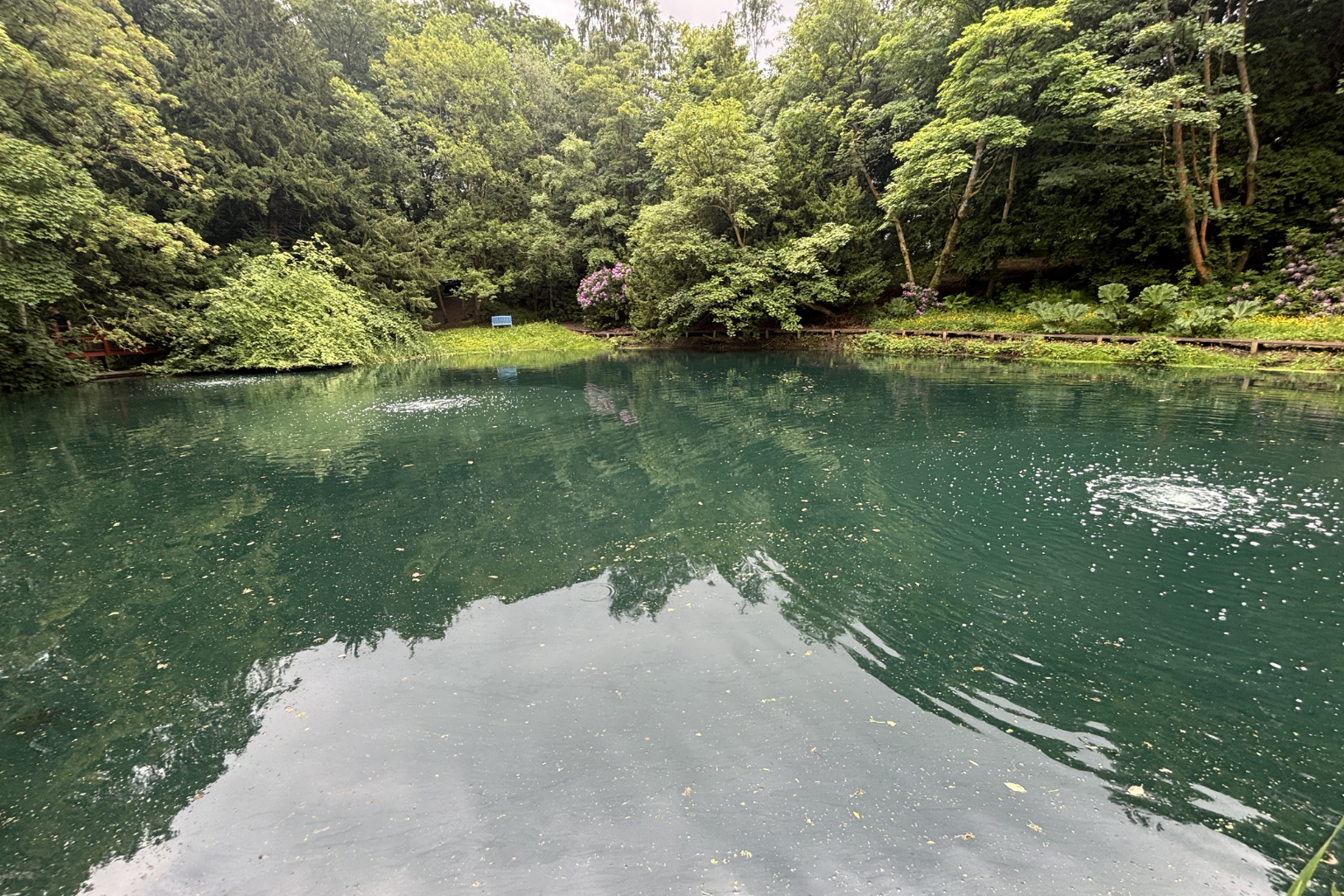
Site Description
Longhirst Lake, a common form of estate lake, was created by an impounding weir on a watercourse. Located in Northumberland, it is roughly oval-shaped, spanning 14,000 m2. The pond is situated within mature woodland, which likely contributes to organic enrichment and sediment build-up due to autumn leaf fall.
Management Issues
Longhirst Lake is an impounded flowthrough system (a pond where water flows in and out, but water is held back by a dam, embankment or other structure) and functions as a sediment sink. For this reason, the lake is susceptible to progressive silt accumulation from transported materials. Additionally, rainfall and surface water run-off from the adjacent golf course is likely to contributing towards elevated nutrients within the waterbody, in particular nitrogen and phosphorus.
Eutrophic conditions within a pond or lake are associated with adverse effects on water quality and aquatic ecological function. A key consequence of nutrient enrichment is the development of blue green algae blooms. Longhirst Lake has previously reported algal blooms and was suffering from a range of water quality management issues.
The Results
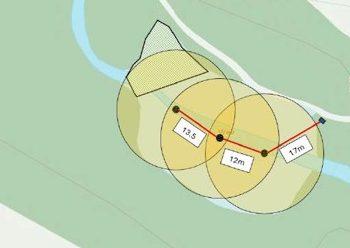
The management team performed a bathymetric survey of the site to ascertain pond conditions prior system design and install. For this site, ISS Flowthrough designed a custom aeration and mixing system comprised of 3(no) diffusers to provide effective mixing through the entire lake – each aeration diffuser operates at 4Nm3/hr. The compressor, number of diffusers and placement of system was carefully considered to account for the depth, width and size of the lake.