
Elevated Manganese and Iron in Potable Drinking Water Sources
Manganese (Mn) and Iron (Fe) are naturally occurring metal element that are found in abundance across the earth. They often co-occur naturally in rock, soil and sediment and enters surface water (i.e. reservoirs) through natural geological processes, internal biogeochemical methods and anthropogenic (human activity) contributions.
In trace amounts, Mn is useful for bone and tissue health, but in larger concentrations consumption has potential health risks. High concentrations of Fe cause unpleasant metallic taste, odour, water discoloration and other aesthetic issues in drinking water. Consequently, the presence of elevated manganese and iron in drinking water supply is associated with costly water treatment for water utilities and associated businesses.
How does Iron and Manganese Contamination Occur?
Iron and manganese contamination in surface water can occur due to several reasons.
Thermal Stratification and Internal Loading:
Thermal stratification is the phenomenon in which distinct temperature layers form within a waterbody. At the deepest layers, the hypolimnion, is subject to cooler temperatures and anoxic conditions. When anoxia occurs, manganese and iron oxides in bottom sediments are chemically reduced to soluble Mn²⁺ and Ferrous iron (Fe2+) and released into the overlying water. In its soluble form, these elements cannot be as easily removed through coagulation and filtration processes. This process is typically the dominant cause of elevated manganese in deep reservoirs.
Groundwater
Primarily, manganese and iron exist as minerals (Fe203, Fe3O4, MnO₂, MnCO₃) within soils, rocks and sediments. When these materials encounter groundwater under low oxygen conditions they readily dissolve and release manganese and iron into the water. Waterbodies that are supplied to by groundwater are at risk of elevated Mn²⁺ and Ferrous iron (Fe2+).
Surface Runoff and Inflow Contributions
Surface runoff can introduce manganese through soil erosion, storm events, and tributary inflows. Concentrations may increase during high-flow periods or in catchments with manganese-rich soils or mining history.
Aeration to Combat Iron and Manganese Contamination
Water aeration is an effective method to treat iron and manganese contamination in water supplies. There are two treatment approaches available.
Artificial Destratification
Artificial destratification can be an effective and reliable method for controlling manganese and iron. When implemented early in the stratification period and as a preventative measure, destratification of a waterbody:
• Prevents the formation of a persistent hypolimnion
• Maintains oxygen throughout the full water column
• Reduces or eliminates anoxic conditions at the sediment surface
• Prevents the chemical reduction and release of metals
• Minimises seasonal manganese and iron accumulation and turnover-related spikes
By maintaining vertical circulation and oxygenation, destratification addresses the root cause of stratified water and internal loading rather than managing its symptoms.
Preventing stratification from establishing in spring generally requires less energy than attempting to break down a fully developed thermocline later in summer. Early season operation can therefore provide both operational stability and improved water quality predictability.
Hypolimnetic Oxygenation
Hypolimnetic aeration, in contrast, seeks to oxygenate bottom waters while preserving thermal stratification. This approach is particularly useful where ecological constraints require maintenance of cold-water habitat or where intake depth makes vertical mixing undesirable.
A Cost-Effective Solution
Water aeration and mixing systems provide a cost-effective alternative to costly and temporary water treatment solutions. The installation of one of our custom systems have potential large cost savings at downstream water processing plants where metals such as manganese and iron are filtered out of the water prior to being supplied as drinking water.
The continuous mixing and introduction of air (oxidation) of the water prevents thermal stratification and anoxic conditions as well as the subsequent release of manganese and iron from solid materials.
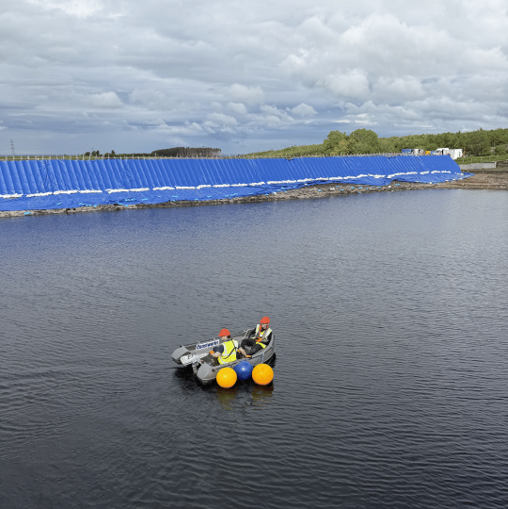
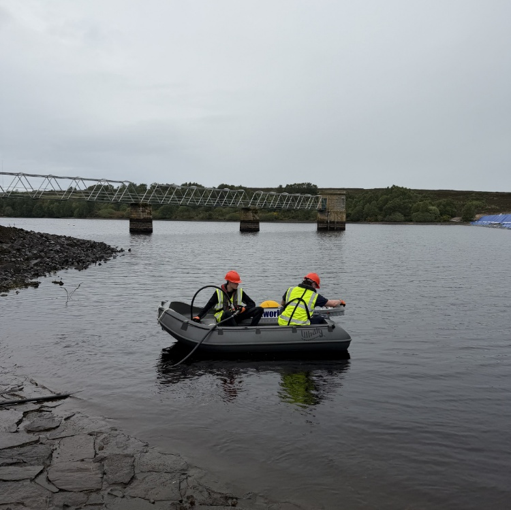
Our custom aeration systems have been installed in waterbodies across the UK and have been deployed to resolve the impacts of elevated manganese in Glenlatterach Reservoir.
No responses yet