

What is blue green algae?
Blue green algae, also known as cyanobacteria, are a type of microscopic organism that can thrive in various aquatic environments. They are characterised by their bluish-green colour and can form large colonies or blooms in bodies of water. However, certain species of blue-green algae can produce toxins that are harmful to both aquatic life and humans. These toxins are released during a bloom, which is a rapid and excessive growth of algae in a specific area. Water aeration can help mitigate the growth of blue-green algae by introducing oxygen into the water. This creates conditions less favorable for their proliferation.
When does blue green algae bloom?
Blue-green algae blooms typically occur when certain types of blue-green algae experience rapid and excessive growth in a lake, pond or canal. These blooms can happen under favourable conditions, such as warm temperatures, abundant nutrients, and calm or stagnant water. The resulting accumulation of blue-green algae can produce harmful toxins, posing risks to the environment and human health.
Blue-green algae blooms tend to occur during warmer months, typically in the spring and summer when water temperatures rise. The combination of increased sunlight, warm temperatures, and nutrient-rich conditions creates the favourable environment for the rapid growth of blue-green algae, leading to the formation of blooms.


What causes blue-green algae?
Stagnant water in lakes is the primary cause of blue-green algae. When water becomes stagnant, it hampers proper circulation and reduces the dissolved oxygen levels. As a result, these harmful algae blooms can occur. There are effective management strategies, such as reducing nutrient inputs and promoting better water circulation. These are essential to mitigate the occurrence of blue-green algae blooms and protect the overall health of lakes and other freshwater bodies.
What does blue green algae look like?
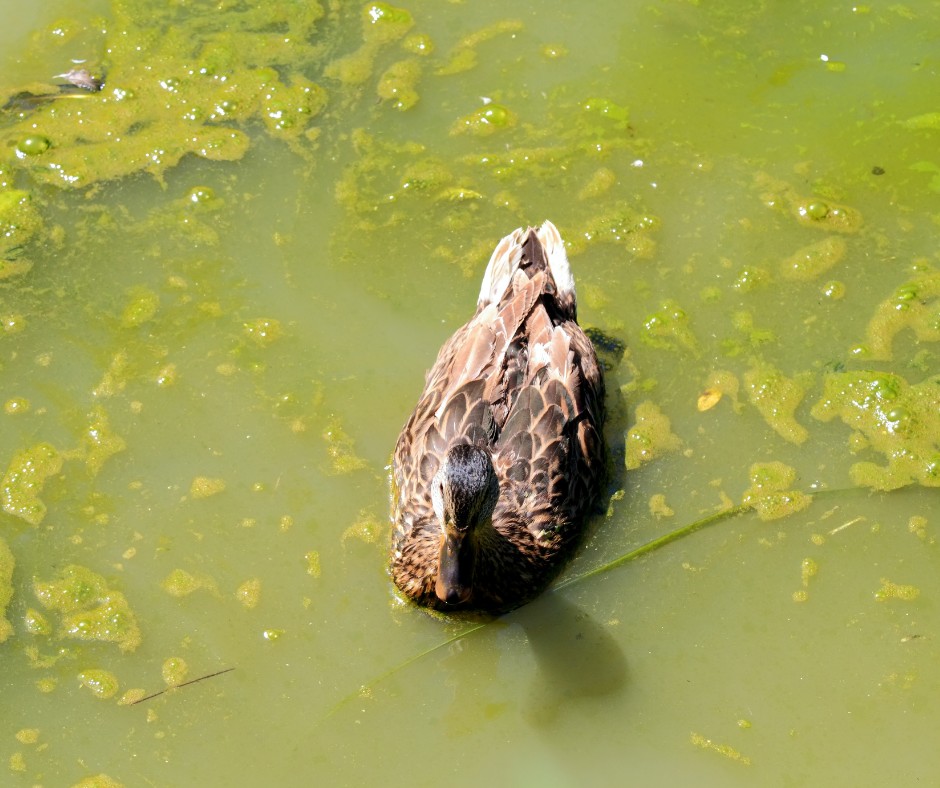
Toxic blue-green algae or cyanobacteria, appear as a greenish-blue scum or foam. This is visible on the surface of lakes, ponds, and other water bodies during an algal bloom. These often create thick layers of mucus-like substances that give the water a murky appearance. Toxic blue-green algae blooms can also produce foul odours and may form dense mats that float on the water’s surface.
How does blue green algae affect aquatic life?
Blue-green algae, especially when forming toxic algal blooms in lakes and ponds, can significantly affect aquatic life. These blooms deplete oxygen levels in the water, creating hypoxic conditions that harm fish and other aquatic organisms. Additionally, the toxins released by certain species of blue-green algae during these blooms can directly poison fish, shellfish, and other aquatic organisms. This can disrupt the aquatic food chain, lead to fish kills, and result in long-term damage to the health and biodiversity of the affected ecosystem.

Is blue-green algae harmful to humans?
Yes, blue-green algae can be harmful to humans. When certain species of blue-green algae form toxic blooms in lakes, ponds, or other water bodies, they can release harmful toxins into the water. Direct contact with these toxic algal blooms, particularly during water sports, kayaking, or outdoor swimming, can lead to various health issues, including skin irritation, eye problems, and gastrointestinal symptoms.
Ingesting water contaminated with these toxins can result in more severe effects. View our Blue Green Algae and Water Sports Safety blog post for more details. It’s important to be cautious and stay informed about the presence of blue-green algae blooms in recreational water sources to ensure personal safety and well-being.
How to avoid blue-green algae
An effective method to get rid of or prevent blue-green algae, particularly during algal blooms in lakes or ponds, is to implement a water aeration system. This system introduces oxygen into the water, creating a less favourable environment for the growth of blue-green algae. The increased oxygen levels encourage the growth of beneficial bacteria that can outcompete the algae, helping to restore the balance of the aquatic ecosystem.
Regularly monitoring water quality, reducing nutrient inputs, and promoting proper water circulation in combination with aeration can further enhance the effectiveness of managing and preventing blue-green algae issues in freshwater bodies. ISS-Flowthrough are able to offer a unique aeration system through use of a patented air flow regulation process that allows a large number of diffusers to be operated from a single narrow bore airline.

If you think you see blue green algae blooms in a waterbody near you, don’t hesitate to report it. The UK Centre for Ecology and Hydrology has an app you can use to report the presence of harmful algae blooms.
Comments are closed