
In the intricate ecosystem of fisheries, maintaining optimal conditions is paramount for the well-being of aquatic life. Aeration involves infusing oxygen into the water, addressing a spectrum of challenges faced by fisheries. From preventing fish kills caused by low oxygen levels to tackling thermal stratification, aeration systems emerge as indispensable tools. In this blog post, we unravel the multifaceted role of fishery aeration, understanding how it contributes to the vitality and sustainability of fisheries by ensuring oxygen-rich waters and a balanced aquatic environment.
When concerning the health of your fishery, thermal stratification during the summer months has a direct impact on dissolved oxygen concentrations. Diffused fishery aeration systems can help.
What is Thermal Stratification?
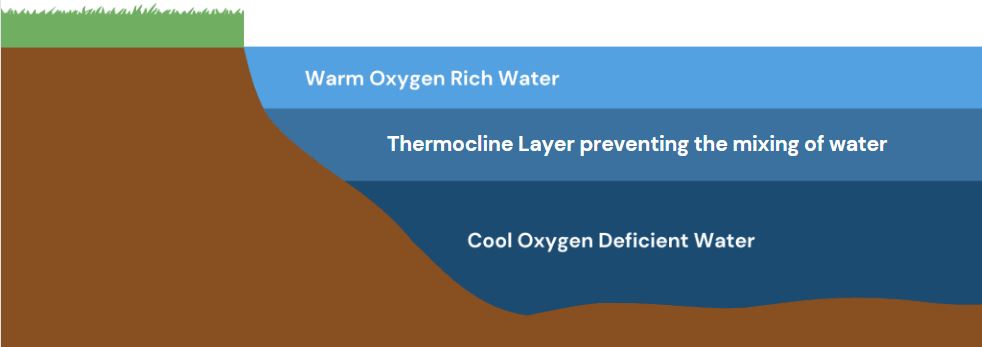
When lakes and reservoirs experience thermal stratification, it means the water forms layers based on temperature.
The melting of ice in the springtime leads to the formation of distinct layers of water in a fishery. As the top layer of water warms up, it becomes less dense and thus floats above the cooler, denser water located below it. This is because the sunlight can only penetrate a few metres into the lake.
When a lake stratifies, three distinct layers usually form: the epilimnion, the metalimnion, and the hypolimnion. The epilimnion is the warmest layer of the lake, situated at the surface and exposed to the sun and wind. It contains the highest amount of dissolved oxygen, which is essential for the survival of aquatic organisms. The metalimnion is the transition layer between the epilimnion and the hypolimnion and may experience rapid temperature changes. The hypolimnion is the coldest layer, located at the bottom of the lake. It contains the lowest amount of dissolved oxygen, and is isolated from the air on the lake’s surface.
These layers of water can be challenging for anglers because at the bottom layer, there’s a shortage of oxygen. Cold-water fish, like trout, can only thrive in the narrow space between the warmer surface and the oxygen-depleted bottom. So, anglers may struggle to locate and catch these fish effectively due to their limited habitat range.
Fishery Aeration for Low dissolved oxygen levels
There are several negative effects that result from development of depleted dissolved oxygen concentrations in the lower water column. These include:
- Fish are unable to use the deeper areas of the lake during the summer months. This excludes a large area of the available habitat. Angling performance can be impacted as fish can only be caught in the shallower areas or near the surface.
- Low oxygen concentrations impact on water quality notably through the release of nutrients and metals. This can also be seen in the development of elevated ammonia concentrations (which is toxic to aquatic life).
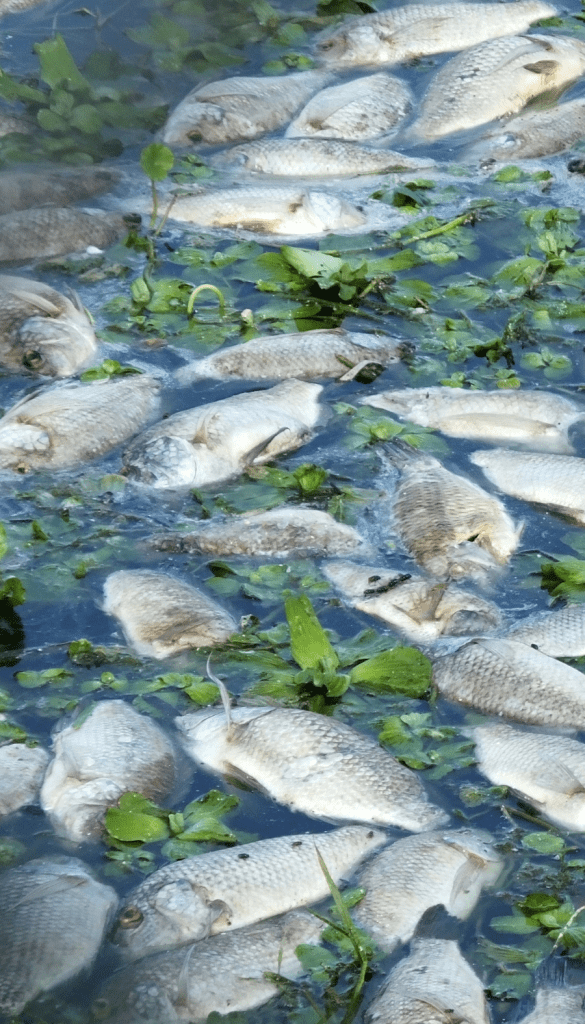
- The cold water layer at the bed of the lake can develop a very poor water quality status. When thermal stratification breaks down at the end of summer, this poor quality water is naturally mixed up into the lake. This may lead to algal bloom development, as well as fish mortalities. The rapid reduction in water quality can also impact on angling performance through putting stress on the fish stocks.
To overcome these issues there is a need to prevent thermal stratification from developing through artificially mixing the waterbody. Mixing can be achieved either through propeller mixer units or through compressed air diffuser aeration. It is worth nothing that propeller mixer units can present an issue in angling lakes.
How does aeration for your fishery work?
ISS Flowthrough diffuser aeration systems are a proven and effective approach for mixing waterbodies. Aeration prevents the development of thermal stratification and raises dissolved oxygen concentrations. Our systems also have the additional benefit of reducing ice formation in the winter and assisting with consolidation of sediments through breakdown of its organic components. The systems are based on a bankside air supply that feeds into a sunken airline that terminates in a number of diffusers distributed across the lake. The diffusers create multiple airlifts that draw the water from the bed and force it to the surface where it is naturally oxygenated by the atmosphere.

Why is fishery aeration important?
A fishery aeration system offers a wide range of benefits, from breaking up thermal stratification to increasing the breakdown of aquatic waste and preventing fish kills in freezing conditions. It allows the entire water column to be oxygenated, eliminating highs and lows in both temperature and oxygen levels. When operated continuously in freezing climates, these pumps will keep open areas in the ice. These open areas will allow toxic gases to escape and increasing the oxygen level in the water. In addition, winter operation will keep areas of frozen fisheries open, allowing birds and other wildlife to gain the much-needed water they need during freezing conditions.
The summer season brings thermal stratification to our waterways. Our aerators will ensure your fishery and fish remain healthy all year round.
Visit our aeration page for more information on our diffused aeration systems. Or contact us for a quote.
Comments are closed